
We have a carefully selected choice of frames available to suit all ages and pockets. Our team will help select options that fit comfortably. You are welcome to take plenty of time to decide your favourite .
Working with top frame manufacturers, including:-
- BOTANIQ – Sustainable eyewear
- Wolf Eyewear– British family-run high quality eyewear
- Silhouette – amazing rimless and other light weight frames
- The eye wear company – stunning portfolio of award winning eye wear including Vanni, Dutz & Plus
- Design Eyewear Group – most stylish selection, including Nifties (for the smaller face) & WOOW
- Rayban – sunglasses and presription eye wear.
- Elle and Esprit – constantly updated styles from top designers
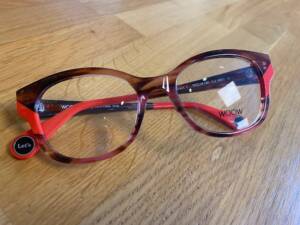
All models available from us at extremely competative prices and fitted for comfort.
Comprehensive advice given to help select the best lens type to suit your needs. We work with several top lens manufacturers (including Rodenstock) and constant improvements in design of lenses in recent years offers increased performance and thinner lenses.
Please contact us to arrange a mutually convenient time to try some amazing frames and discuss your lens requirements.
Spectacle recycling
We collect and recycle used spectacles. Click here to find out more.
Please feel free to call in to drop off any used spectacles.
Spectacles fogging up whilst wearing a mask?
Click here for numerous tips to help reduce this annoyance when wearing a face covering or moving between different temperatures. The latest spectacle lens coatings reduce misting and Nano Anti-Fog drops are available to apply to spectacle lenses.
Keep your eyes safe
You should consider wearing eye protection suitable to the job or hobbies you do, which offer greater protection than your usual spectacles. This can take the form of a separate pair of safety spectacles and are available with single vision, bifocal or varifocal lenses. The strongest lenses are made from Polycarbonate or Trivex materials. We at Dunstone Optometry provide numerous types which all comply with British and European Standards. Our selection offers a good choice of styles, colours and sizes.
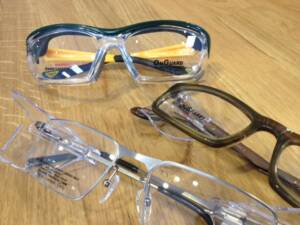
Please contact us if you would to consider protecting your eyes and we will be happy to discuss and quote for the optimum type for your lifestyle.
Driving and vision – are you safe?
What standard of vision is needed for driving?
Car drivers (group 1) must be able to read a car number plate from 20 meters. You also need to be able read the 6/12 line of letters on an optometrists Snellen chart using both eyes together or, if you only have sight in one eye only, in that eye.
Lorry and bus drivers (group 2) must meet more stringent eyesight requirements, with a medical and vision check when they first apply for their licence, and then every five years from age 45 and every year from age 60.
Licensed taxi drivers must meet the vision requirements of their local authority, which vary but are often the same as for group 2 drivers.
How to check your vision
You can test yourself by reading a car number plate from 20 meters. You should check this yourself regularly. When checking vision, the number plate should be from a car made after September 2001, since the size of plates changed at that time. Spectacles or contact lenses should be worn, if necessary.
We will check your vision on a Snellen chart during an eye examination.
Driving with eyesight below the required standard is illegal and may also mean your motor insurance is not valid. For more information on DVLA driving requirements click www.gov.uk/driving-eyesight-rules
Medical conditions
You must tell the Driver and Vehicle Licensing Agency (DVLA) about certain eye or general medical conditions. The most common conditions (but not the only ones) are age-related macular degeneration, cataracts, glaucoma and diabetic retinopathy.
If you are a group 1 driver, you must tell the DVLA if you have a medical condition affecting both eyes, including different conditions in each eye. If you are a group 2 driver, you must tell the DVLA if you have a medical condition affecting either eye.
The DVLA may then send you for a field-of-vision test in which lights are flashed in the edge of your vision. People are generally poor at judging their own field of vision, and blind spots in your vision create a risk of accidents, especially involving pedestrians. An eye examination carried out at Dunstone Optometry will always include a visual field test, to sensitively check your peripheral vision. We are also able to offer an Esterman visual field test (as used by the DVLA) which is performed binocularly (with both eyes simultaneously).
For more information on when to contact the DVLA click here.
What should I do if I feel my vision is getting worse for driving?
You should see your optometrist who will be able to tell you if you need a new spectacle prescription, whether you need to be referred to an ophthalmologist (eye doctor), or if you have a condition that should be declared to the DVLA. It is wise to attend for regular eye examination even if you are not having problems with your sight, as eye and general health problems can often be detected at an early stage.
Driving lenses
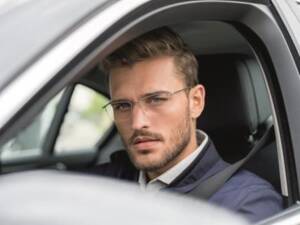
If spectacles are required for distance, modern lenses are available from Dunstone Optometry to optimise vision for the dynamic task of driving. Rodenstock ‘Road’ lenses are designed to sharpen drivers vision and reduce peripheral distortion to give good all-round vision. These lenses are available in single vision distance or varifocal form and perform just as well in every other way yet offer optimised vision for driving.
You are most welcome to attend Dunstone Optometry if you have any queries regarding your vision or are due a routine eye examination. Please contact us to discuss your requirements or make an appointment.